Curiosity is one of the most precious things a child has. It is what makes them ask "why?" for the hundredth time in a day, take apart a toy to see what's inside, or stop in the middle of a walk to watch an ant carrying a crumb. The good news is that curiosity doesn't need expensive toys, special classes or long trips. It grows best in small, everyday moments at home.
Here are ten simple, screen-free ways to help it grow.
1. Ask "What do you think?" before giving answers
When your child asks a question, try turning it back to them first: "What do you think?" You may be surprised by their ideas. Even when their guess is wrong, thinking it through is where real learning happens.
2. Go on a window walk
Sit by a window together for ten minutes. Count the birds you see, notice the shapes of the clouds, or spot every colour on the street. It is a calm, simple way to practise observation, one of the most important skills of any scientist.
3. Try a kitchen experiment
Your kitchen is a small science lab. Watch ice melt in warm and cold water, see what dissolves in water and what doesn't, or float different objects in a bowl. Always do it with a grown-up nearby, and let your child predict what will happen first.
4. Keep a wonder jar
Place an empty jar somewhere in your home. Whenever your child wonders about something, write the question on a slip of paper and drop it in. Once a week, pull one out and explore the answer together through books, conversations or a small experiment.
5. Draw what you see
Ask your child to draw a leaf, a cup or a plant by looking at it closely, not from memory. This simple activity trains the eyes to notice tiny details, and children often discover things they had never noticed before.
6. Read true stories of curious people
Children love real stories. Share the lives of people who followed their curiosity, like C. V. Raman, who wondered why the sea is blue, or Salim Ali, who spent his life watching birds. True stories show children that their questions can lead to great things.
7. Explore your own city or village
You don't have to travel far to explore. Visit a local monument, market, temple, park or museum and talk about its history. Ask your child what they notice, what they think it was like long ago, and what they would like to know more about.
8. Solve puzzles together
Mazes, riddles, word searches and logic puzzles build patience, focus and problem-solving skills. Doing them together also turns learning into a shared, joyful activity rather than a task.
9. Let them be the teacher
Ask your child to explain something they have learned: how a plant grows, how a game works or what they discovered today. Teaching someone else helps children understand ideas more deeply and builds their confidence.
10. Celebrate questions, not just right answers
When your child asks a thoughtful question, tell them it was a great question. When they try something and it doesn't work, praise the trying. Children who feel safe to wonder, guess and make mistakes become lifelong learners.
Small moments, big discoveries
You don't need to do all ten at once. Choose one or two that feel easy and make them part of your week. Small moments of wonder, repeated often, slowly grow into a lifelong love of learning.
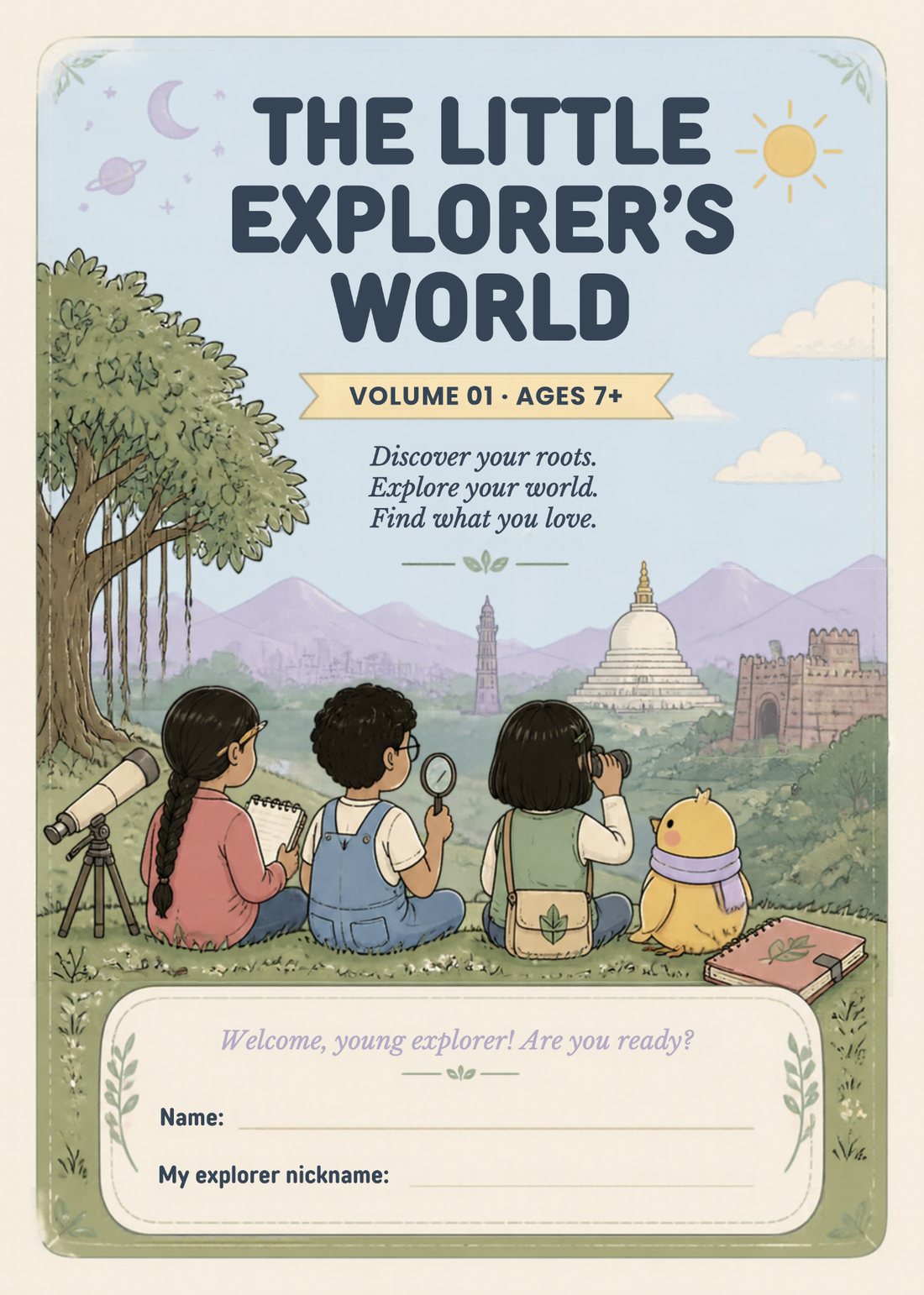
Looking for more ideas like these? The Little Explorer's World – Volume 01 is full of simple experiments, puzzles, nature activities and true stories, all designed for curious children aged 7 and above. No marks, no pressure, just questions and discoveries.